

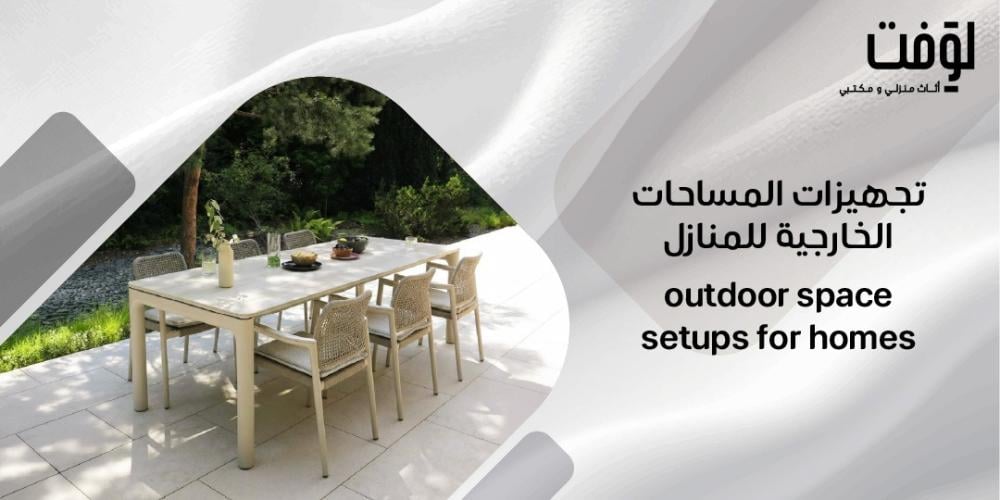
Many homes possess outdoor spaces that remain underutilized, whether it is a garden, terrace, rooftop, or courtyard. These areas hold genuine potential to become welcoming hospitality spots or daily relaxation nooks; however, a lack of planning often transforms them into neglected zones or spaces cluttered with mismatched pieces.
Equipping residential outdoor spaces does not start with purchasing—it begins with a simple question: How will this space be used? Who are the primary users? What weather conditions will the pieces be exposed to? Answering these questions guides every subsequent decision, from selecting weather- and dust-resistant materials to determining dimensions that allow for fluid movement without overcrowding.
This article provides a practical guide to properly equipping every type of outdoor space. Gardens accommodate larger configurations complete with plants, lighting, and pathways, whereas terraces suit lightweight, mobile furniture. Open rooftops require functional rooftop furniture designed to withstand continuous exposure to sun and wind, while courtyards and backyards are best served by family-oriented outdoor seating setups that offer privacy.
Explore the outdoor furniture options at Loft Store today to find the perfect piece for your layout, whether you are looking for a complete conversational set or an outdoor dining arrangement tailored to your home's details.
Types of Outdoor Setups and Their Uses
Before selecting any furniture piece, it is essential to define the primary function of your outdoor area, as equipment varies based on its intended purpose. Some families prioritize an outdoor seating nook for relaxation and hosting, others focus on a structured dining area, while some combine both within a balanced layout that reflects their daily routine.
1. Family Relaxation Lounges
Outdoor family lounges designed for extended seating and daily conversations rely primarily on an outdoor sofa or a comfortable sectional, complemented by supportive armchairs and a matching outdoor coffee table. This setup accommodates both casual entertaining and quiet downtime, provided the seats offer strong back support and withstand frequent use.
Plush seating anchored by a central low table lends warmth and a welcoming feel to the space, making it a preferred choice for those who regularly host guests outdoors.
2. Outdoor Dining Areas
An outdoor dining table surrounded by an adequate number of chairs forms the backbone of this setup. The table size must match both the family size and the expected number of guests. Crucial details often overlooked include the clearance required behind chairs when pulling them out to sit or stand, as well as the surrounding pathways that facilitate smooth movement.
Equipping an outdoor dining area requires practical spatial planning rather than focusing solely on aesthetics; cramped pathways ruin the dining experience regardless of how attractive the furniture is.
3. Small Courtyard and Balcony Nooks
Limited spaces in a courtyard or balcony cannot accommodate large furniture sets that block foot traffic. The smartest solution here is to rely on smaller-scale pieces, such as a compact bistro set with a lightweight side table and easily movable or foldable chairs.
This style gives small spaces genuine utility without appearing cluttered, offering homeowners the flexibility to rearrange their setup whenever desired.
4. Exposed Rooftop Lounges
Exposed rooftops present a completely different environment; they face direct sunlight, wind, and ambient weather shifts, making furniture selection critical. Equipping rooftops requires practical pieces that are easy to rearrange, bundle, or protect when the area is not in use.
Rooftop lounges benefit from lightweight yet durable outdoor furniture that withstands weather elements while offering easy mobility and storage, rather than heavy, unwieldy pieces.
Spatial Planning and Layout Design
Before buying any furniture piece or decorative accent, spatial planning comes first. A common mistake is purchasing outdoor furniture without measuring the area beforehand, resulting in pieces that either block walkways or look lost in a vast space. Dimensions alone are insufficient; you must account for doors, walls, fencing, plants, and traffic paths before making any decision.
1. Measuring the Space Accurately
Accurately measuring your outdoor footprint is the first step in furnishing any terrace, balcony, or courtyard. Precise dimensions prevent buying ill-fitting pieces and help you visualize the final outcome before spending your budget.
What to measure and record:
- Measure the full length and width of the space, recording exact figures before proceeding.
- Identify door and window placements to avoid blocking any entryway with furniture.
- Note fixed structural obstacles such as columns, wall projections, and drainage outlets.
- Observe shade patterns at different times of the day to determine the best placement for seating.
- Draw a simple floor plan outlining the distribution of the seating nook, dining area, planter spots, and lighting fixtures.
2. Zoning Functional Areas
After taking measurements, organize your courtyard or balcony into clear functional zones. A well-planned outdoor arrangement ensures that every corner serves a specific purpose and that transitions between areas feel natural and fluid.
Practical zoning guidelines:
- Designate a dedicated corner for entertaining or relaxation away from main foot traffic.
- If space permits, add a separate dining zone so it can function independently.
- Ensure traffic pathways between zones do not overlap or bottleneck; clear layouts enhance visual appeal and daily convenience.
- Treat each zone like an independent, smaller-scale room with its own boundaries and furniture.
3. Preserving Walkway Clearances
Large balcony or courtyard furniture loses its appeal when it blocks walkways. Leaving sufficient clearance around furniture opens up the space and ensures comfortable movement for family members and guests.
Recommended clearance guidelines:
- Around Outdoor Dining Tables: Leave a clearance zone of 76 cm to 120 cm on all sides, depending on chair depth, overall spatial constraints, and traffic volume. A clearance of roughly 90 cm works comfortably in most layouts for pulling out chairs and walking past.
- Coffee Table Clearance: Maintain a distance of 35 cm to 45 cm between the front edge of the seat cushion and the coffee table for easy accessibility without feeling cramped, taking into account seat depth and personal usage.
Note: These are layout planning benchmarks rather than rigid rules; always adjust them according to your specific furniture dimensions and spatial contours.
4. Smart Corner Utilization
Tight footprints do not mean sacrificing comfort or style. Furnishing a small terrace or balcony is most effective when pieces are anchored against perimeter edges and corners rather than clustered in the center.
A small corner seating setup optimizes space usage without feeling crowded, keeping the remaining area open and easy to navigate. The golden rule is to avoid placing any furniture directly in front of primary entryways or pathways, as doing so compromises utility and restricts access.
Selecting the Right Outdoor Materials
Material choice is not merely an aesthetic detail; it is the primary factor determining how well your furniture resists real-world weather conditions. Solar exposure, dust accumulation, humidity, and coastal proximity directly dictate the best choice. Furthermore, buyers should consider the level of maintenance they can realistically commit to over time.
1. Aluminum vs. Powder-Coated Iron
Aluminum and powder-coated iron are two of the most widely used frame materials in outdoor furniture and garden sofas, each offering distinct characteristics:
- Aluminum: Lightweight, making it significantly easier to move and rearrange across your outdoor space.
- Powder-Coated Iron: Heavy and highly stable in windy environments, but requires periodic checks on its protective coating to prevent moisture exposure.
- Versatility: Both materials come in various finishes that suit diverse design styles, from classic to contemporary setups.
- Context: No single material suits every environment; geographic location and local climate determine the best choice.
2. Weather-Treated Wood and Synthetic Rattan
Treated wood and synthetic rattan provide a warm appearance and visual texture that contrast with metal frames, making them popular choices for garden and terrace seating. Before purchasing, verify that the product is explicitly engineered for outdoor use rather than indoor applications.
- Treated Wood: Holds up against weather elements far better than standard timber, but requires routine maintenance according to manufacturer guidelines.
- Synthetic Rattan: Highly moisture-resistant compared to natural wicker and performs well in diverse climates when outdoor-rated.
- Care Instructions: Care requirements vary by product; following them closely significantly extends the furniture's lifespan.
3. Outdoor Fabrics and Cushions
Cushions and fabrics add physical comfort to weather-resistant furniture frames, but they require informed selection. Choose fabrics specifically rated for outdoor use, paying close attention to cover removable capabilities, cleaning ease, and drying properties.
Key cushion considerations:
- Pure cotton absorbs water quickly, increasing the risk of odors if the inner foam remains wet for extended periods.
- Never leave soaked cushions without drying them thoroughly.
- Removable, washable cushion covers simplify daily maintenance and extend product life.
4. Climate and Location Factors
Your site's environmental conditions play a crucial role in deciding which outdoor materials to select:
- Sunny Locations: Require furniture and fabrics with UV protection, along with protective covers when not in use.
- Humid Environments: Demand regular ventilation and drying routines to prevent moisture buildup within or under materials.
- Dust-Prone Areas: Benefit from smooth, non-porous finishes that are easy to wipe down, minimizing particle buildup during routine cleaning.
Decor Coordination and Outdoor Amenities
Furniture provides the primary foundation, but completing a garden or terrace layout requires supporting elements that unify the space visually and practically. Equipping an outdoor area requires integrating lighting, plants, shade solutions, and color palettes into a cohesive, un-cluttered setup.
1. Color Palettes and Visual Identity
Neutral tones on modern outdoor furniture provide visual flexibility that blends seamlessly with flooring finishes and surrounding greenery. When the primary furniture frame is muted, accent cushions and interchangeable decor accessories become the primary tools for adding vibrant seasonal color.
This approach gives you the freedom to update your courtyard's mood across seasons without replacing the core furniture pieces—swapping a throw pillow or adding a seasonal accessory is enough to transform the entire look.
2. Safe Outdoor Lighting
Outdoor lighting is a functional requirement to ensure safe movement while establishing a cozy atmosphere for outdoor entertaining. Lighting plans should illuminate pathways while casting a glare-free glow over the seating area.
Lighting safety & design tips:
- Position light sources away from trip hazards, such as step edges and narrow passages.
- Avoid exposed wiring connections that could be subjected to moisture or high heat.
- Adhere strictly to local electrical safety standards applicable to outdoor installations.
- Consult a certified electrician for any permanent wiring that goes beyond simple plug-in fixtures.
3. Greenery, Planters, and Pathways
Climbing plants, aromatic herbs, and strategically placed planters frame your outdoor entertainment area in a natural boundary that enhances privacy and comfort. Thoughtful garden design uses plants to define space rather than crowd it.
Pathways deserve equal attention: keep foot traffic routes wide and clear, avoiding planter placements that obstruct door swings or prevent chairs from pulling out smoothly. Open central floor space creates a sense of airiness even in compact gardens.
4. Shade Solutions, Storage, and Protective Covers
In open-air setups, umbrellas and shade structures make the difference between a space used daily and one abandoned during peak afternoon heat. Protective measures safeguard your furniture and prolong its operational life.
Protective covers keep modern outdoor furniture clean and dry between uses, while dedicated outdoor storage boxes for cushions protect soft goods from dust and moisture. These details are essential investments in the long-term durability of your outdoor setup.
Featured Outdoor Highlights from Loft
Loft Store offers a curated selection of outdoor furniture engineered for relaxation, entertaining, and dining across gardens, terraces, and rooftops. These pieces account for spatial dimensions and daily usability:
1. MUSES 2.5-Seater Outdoor Sofa Set with Two Armchairs
The MUSES outdoor collection combines sleek lines and comfortable seating in a unified weather-ready design.
- Sofa Dimensions: 232 cm (L) x 81.5 cm (W) x 75 cm (H)
- Armchair Dimensions (each): 88 cm (L) x 81 cm (W) x 75 cm (H)
- Design & Finish: Upholstered in an elegant gray outdoor fabric.
The gray tone provides versatile styling compatibility with various pavers, decking, and foliage. This set is ideal for hosting guests or lounging on a rooftop or garden patio. Always verify your available layout clearance and follow specific fabric care instructions for outdoor maintenance.
2. Verona Round Outdoor Dining Table (Medium)
The Verona Round Dining Table completes your outdoor setup with a practical layout designed for al fresco meals.
- Dimensions: 120 cm Diameter x 75 cm Height
- Design & Finish: Features an enclosed base with a soft ivory finish that coordinates with multiple design styles.
Its circular silhouette fosters conversation and provides equal spatial distribution for all diners. Measure your surrounding dining footprint with chairs pulled back to ensure comfortable movement around the table.
Frequently Asked Questions
- What are the key fundamentals of residential garden design? Start by defining the function of the space and measuring its exact dimensions, followed by outlining clear traffic pathways. Select seating, plants, and lighting proportional to the garden size and local climate.
- What are the most essential outdoor decor principles? Achieve balance across color choices and material textures while avoiding overcrowding. Establish a clear visual focal point and integrate lighting and greenery that complement the seating area.
- How should I approach furnishing an outdoor space? Begin with core anchor pieces that fit the area's dimensions and user capacity, then introduce side tables, cushions, and decorative accents incrementally. Prioritize clear walkways for safety and daily comfort.
- What are the top tips for outdoor space design? Measure your footprint prior to purchasing, choose weather-resistant materials suited to your climate, assign clear functional zones to every corner, and utilize protective covers to safeguard furniture from the elements.
Equipping residential outdoor spaces is a comprehensive design process that starts with understanding room proportions and usage needs, moves through selecting weather-appropriate materials and clear walkways, and finishes with a solid care routine. When these elements align, any outdoor area—regardless of size—transforms into a comfortable extension of your home. Identify your layout measurements, determine whether you need a relaxation lounge or a dining setup, and explore the outdoor collection at Loft Store to find the right pieces for your lifestyle.