

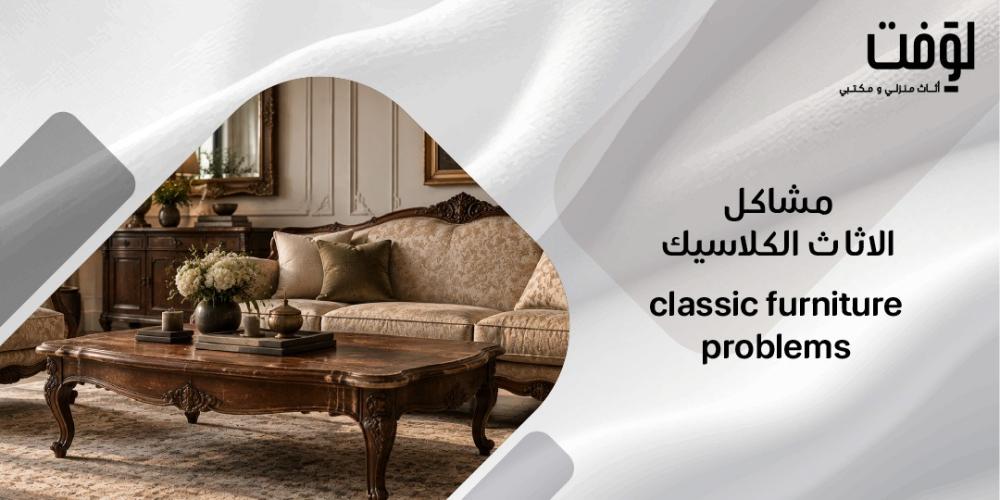
Many people fall into the trap of initial glamour — they see a classical furniture piece that looks luxurious in a showroom, so they decide to buy it without considering room dimensions, daily cleaning routines, or whether the design suits their family's lifestyle. That lavish piece then turns into a real burden, whether in terms of restricting movement within the home, difficulty in maintenance, or clashing with the rest of the decor elements.
The problems of classic furniture are not merely a matter of taste; they are practical challenges that directly affect comfort, function, and spatial layout. This article objectively reviews the most prominent issues, helps you compare available alternatives — whether you are considering fully modern furniture or a thoughtful mix of both styles — and guides you toward making an informed decision. Before buying, browse Loft to compare dimensions, materials, and designs tailored to your actual space — because the right choice always begins with accurate information.
Major Problems of Classic Furniture
Classic furniture carries a level of luxury and sophistication that makes it a dream for many. However, before deciding to buy, it is essential to pause at the practical challenges this style imposes. The drawbacks of classic furniture are not a reason to avoid it altogether, but rather key considerations to factor in so that your choice aligns with your space and lifestyle.
1. High Cost
The cost of luxury classic furniture directly reflects the raw materials and craftsmanship invested in its production. As details and carvings increase, the price rises significantly.
- Solid Hardwoods: Woods such as walnut and mahogany are used for core frames, making them far more expensive than synthetic alternatives.
- Hand Carving & Premium Upholstery: Intricate hand-carved details and luxurious fabrics like velvet and genuine leather add layers of expense to each piece.
- Traditional Craftsmanship: Highly detailed pieces produced through authentic traditional methods require a noticeably higher budget.
2. Large Size and Heavy Weight
Substantial weight and bulky proportions are defining characteristics of classic style, but this visual asset becomes a logistical hurdle when moving or rearranging a room.
- Specialized Moving Services: Heavy pieces typically require professional movers to prevent damage to flooring or walls.
- Narrow Passageways: Fitting large furniture through standard doorways and tight hallways often demands partial disassembly or advance planning.
- Rigid Layouts: Rearranging heavy furniture is far from easy, making periodic room updates an exhausting task.
3. Complex Cleaning and Maintenance
Maintaining dense upholstery and intricate carved details consumes significantly more time and effort than caring for simple, clean-lined furniture. Raised carvings, tufting, and heavy fabrics act as dust traps that are difficult to reach regularly.
- Specialized Cleaning Tools: Fine carvings and sculpted edges require delicate cleaning tools to prevent damaging intricate details.
- Delicate Fabrics: Premium textiles such as brocade or velvet demand specialized care and must be kept away from harsh chemicals.
- Expensive Repairs: Restoring damaged sections on complex, traditional designs can be costly and requires specialized artisans.
4. Restrictive Formal Ambiance
The heavy visual mass and formal character inherent to classic furniture do not always suit the flexible demands of modern daily life, particularly in family living rooms with continuous activity and evolving needs. Those who enjoy periodically updating their home decor may find the permanence and formality of classic furniture restricting to their creative freedom.
Practical Alternatives from Loft
If concerns regarding the size and arrangement of classic furniture are holding you back, Loft offers practical design options that address these challenges directly. Every piece comes with clear specifications regarding materials, colors, and dimensions, allowing you to choose the perfect fit for your space without guesswork.
1. Wallace Chair
The Wallace Chair combines elegance and practicality, effortlessly fitting both modern and traditional interiors without overwhelming the room. Upholstered in a soft-touch fabric with light brown walnut-veneered legs, its balanced dimensions — 75 cm (W) x 78 cm (D) x 70 cm (H) — make it ideal for living rooms while conserving floor space. It offers a refined balance of comfort and durability in an attractive silhouette.
2. Bingo 3-Seater Sofa
The Bingo Sofa in beige is a modern three-seater sofa measuring 284 cm (W) x 96 cm (D) x 85 cm (H). It stands out as an ideal alternative for those seeking to avoid the bulk of oversized classic seating. Crafted from durable, high-quality fabric in a versatile beige tone, it features supportive cushions, dense filling, and a solid closed base. It works exceptionally well in living rooms and spacious bedrooms alike.
Spatial Requirements for Classic Furniture
Choosing classic furniture depends on more than just aesthetic preference; it involves technical factors such as actual dimensions, traffic pathways, and the visual footprint each piece leaves in the room. A common issue with classic furniture is that buyers realize after delivery that a piece fills the space far more than expected — not only due to its physical size, but because its heavy visual weight multiplies the perception of crowding.
1. Small Apartments
Classic furniture naturally features thick backrests, wide armrests, and substantial heights, complemented by dark wood tones and heavy carvings that increase visual weight. In a small room, these elements compound to create a cramped atmosphere, even with minimal pieces.
- Visual Footprint: High backs and wide arms occupy both visual and physical space simultaneously.
- Dark Color Palettes: Rich shades like deep brown and burgundy can make walls feel closer than they actually are.
- Dense Ornamentation: Intricate carvings and detailed patterns distract the eye and heighten the feeling of fullness.
- Overcrowding: Placing multiple heavy pieces in a small room almost always leads to a cluttered visual outcome.
2. Spacious Rooms
Classic furniture finds its natural element in medium-to-large rooms, which offer sufficient breathing room around each piece. High ceilings and open floor plans harmonize with the scale and height of classic designs, creating balanced luxury rather than clutter.
3. Measuring Doorways and Passageways
One of the most frustrating classic furniture issues is discovering that a delivered item cannot pass through the door or fit through a hallway. Follow these steps prior to purchasing:
- Room Proportions: Accurately measure the length, width, and ceiling height of the intended room.
- Entry Points: Measure the width and height of all exterior and interior doorways along the delivery route.
- Stairwells & Corners: Inspect stairwell angles if the room is on an upper floor, as tight turns are frequently the main obstacle.
- Full Pathway Verification: Trace the entire path of entry from the building entrance to the final placement spot.
- Traffic Pathways: Reserve 60 cm to 90 cm of clear walkway space in front of sofas and between key pieces, ensuring doors and windows can open without obstruction.
Caring for Wood and Upholstery
Owning classic furniture requires accepting its maintenance routine as an essential part of the ownership experience. When a single piece combines carved solid wood with velvet or patterned upholstery, regular care becomes necessary to preserve its beauty and lifespan.
1. Regular Dusting
Upholstery on classic furniture is a complex structure of fibers, tufts, and trims that easily traps dust. Routine cleaning is the simplest way to prevent fabric degradation.
- Soft Brush Attachments: Use a soft brush attachment on your vacuum cleaner to reach deep into tufts and carvings without causing friction on the fabric.
- Gentle Motion: Vacuum using slow, gentle strokes; light suction is sufficient to pull accumulated dust from fibers.
- Target Recesses: Pay special attention to seams between the seat and backrest, as well as carved wooden frame crevices where dust collects.
2. Cautious Spot Cleaning
Stains are a common challenge, and how you handle them determines whether they disappear or leave a permanent mark. Aggressive scrubbing often causes more damage.
- Blot, Don't Scrub: Press a clean, slightly damp cloth onto the affected spot to absorb the liquid. Avoid rubbing, as scrubbing can pull threads or damage the fabric pile.
- Spot Test First: Always test any fabric cleaner on an inconspicuous area, such as the underside of the seat cushion or behind the backrest.
- Manufacturer Guidelines: Strictly follow care instructions specific to your fabric type, as methods suitable for velvet may damage silk or embroidered textiles.
Note: Cleaning results vary based on fabric type, stain age, and specific care instructions. Test discreetly before applying treatments broadly.
3. Pre-Purchase Quality Inspection
Preventing classic furniture problems begins before making a payment. Inspecting pieces thoroughly saves significant hassle later.
- Wood & Finish: Examine the wood type and finish quality to ensure surfaces are free from cracks or finish gaps.
- Structural Stability: Test joint stability by gently pressing against the frame edges; any early wobble or creaking indicates weak joinery.
- Upholstery & Fillings: Inspect stitching density and evaluate inner cushions and spring support by sitting down and applying pressure.
- Care Instructions & Support: Ask the retailer directly about recommended care guidelines and the availability of replacement parts or touch-up services.
Classic vs. Modern Furniture
Comparing classic and modern furniture side by side provides a clear framework for deciding which approach best fits your lifestyle and space.
1. Design and Details
- Classic Style: Defined by rich details, hand carvings, ornate patterns, and dark wood finishes. Uses heavy, textured fabrics like velvet and brocade in warm, deep color schemes. Features larger visual mass and heavier physical weight.
- Modern Style: Emphasizes clean, simple lines, minimal ornamentation, and lightweight silhouettes. Utilizes lighter, flexible fabrics in neutral, versatile color palettes that blend easily across diverse spaces.
While classic design relies on intricate detail to convey grandeur, modern design achieves elegance through restraint and clean proportions.
2. Daily Use and Flexibility
- Classic Furniture: Heavier physical weight makes moving and reconfiguring arrangements difficult. Requires extra time and care to clean deep carvings and detailed upholstery. Demands precise styling coordination to maintain a cohesive formal look.
- Modern Furniture: Lightweight construction allows effortless rearranging and modular layout changes. Smooth surfaces and simple silhouettes streamline routine daily cleaning. Offers versatile compatibility with various decor accents and changing room layouts.
3. Cost and Long-Term Value
- Classic Furniture: Higher initial investment due to premium raw materials and labor-intensive craftsmanship. Maintenance can be higher due to specialized fabric care and delicate finishes. Updating decor can be restrictive, as replacing a single item may disrupt the balance of a matched set. Holds strong long-term value when crafted from high-grade solid woods.
- Modern Furniture: Diverse price points cater to a wide range of budgets. Lower ongoing maintenance costs thanks to resilient, low-maintenance materials. High flexibility allows replacing or adding individual pieces seamlessly without redesigning the whole space. Value varies based on build quality and material selection.
4. Blending Both Styles (Transitional / Contemporary Classic)
You do not have to choose exclusively between classic and modern. Blending both styles — often called Transitional or Contemporary Classic — is a smart approach to enjoying classic elegance while mitigating its practical downsides.
- Focal Classic Piece: Place a single sculpted classic chair alongside a sleek, modern sofa so the chair serves as an artistic accent rather than an overwhelming visual weight.
- Material Contrast: Pair a classic dark-wood side table with a sleek metallic modern lamp to blend warmth with contemporary flair.
- Neutral Backdrops: Use neutral rugs and minimal wall treatments to soften heavy classic motifs and create an open visual feel.
Common Buying Mistakes to Avoid
Avoiding common pitfalls before completing your purchase minimizes the chance of facing unexpected issues after delivery.
- Ignoring Home Dimensions: Buying without measuring room layout, door clearances, and stairwells often leads to pieces blocking traffic or failing to fit through doorways.
- Focusing Solely on Price: Comparing items by price tag alone ignores essential factors like wood quality, upholstery durability, frame construction, and future maintenance needs.
- Overlooking Build Quality: Failing to verify joint stability, finish consistency, and cushion resilience can lead to early wear and structural issues.
- Mixing Clashing Elements: Combining too many varied patterns, wood tones, and heavy carvings without a unifying color scheme results in visual clutter rather than cohesive luxury.
Pre-Purchase Checklist
- Measure room dimensions, entryways, and hallway clearances accurately.
- Establish a complete budget that includes delivery and potential care products.
- Review material specs, wood types, and fabric care guidelines thoroughly.
- Confirm that the piece suits your household's daily traffic and cleaning routines.
- Select designs that complement your overall spatial layout and living habits.
Choosing furniture successfully requires balancing aesthetic appeal with spatial reality and daily usability. High costs, substantial weight, delicate care needs, and large footprints are key factors to evaluate when selecting classic designs. By carefully assessing your room dimensions, understanding material care, or thoughtfully pairing classic accents with modern foundations, you can create an inviting, functional home. Explore the collection at Loft to review detailed measurements, material specs, and versatile designs crafted for your living space.