

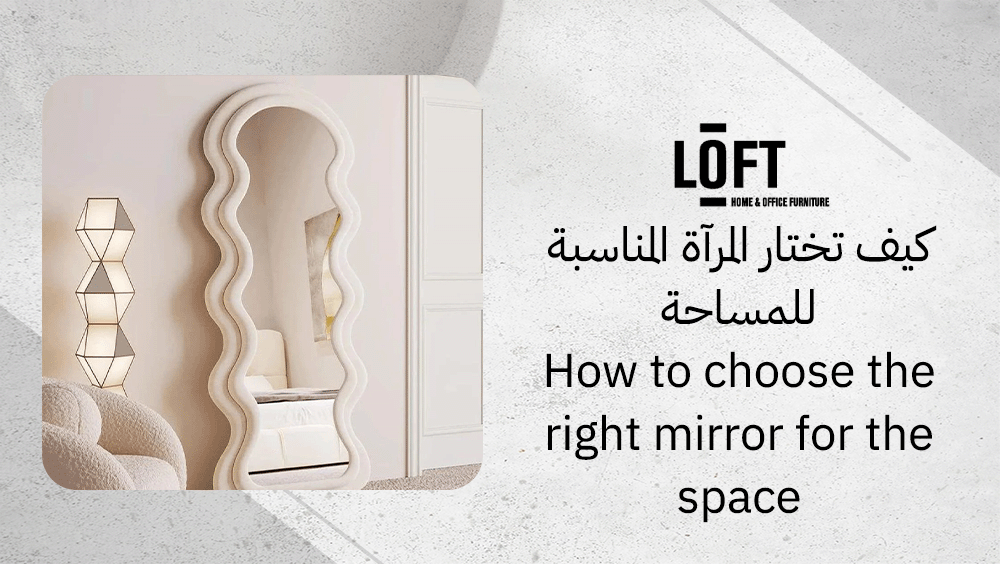
Choosing the right mirror for a space begins with understanding what you want to achieve within that area. The correct decision depends on identifying the mirror’s function, selecting a size that harmonizes with the wall and furniture, and preferring a shape that matches the décor style. Whether you are looking for a wall-mounted mirror, a bedroom mirror, or mirrors that expand the perception of space in entryways, placing the mirror where it reflects light and enhances the sense of spaciousness helps achieve a clear visual effect, especially when selecting a mirror for small areas or mirrors that reflect light strategically.
By understanding these four key elements, choosing the appropriate mirror becomes easier and more precise, whether it is a modern mirror within contemporary décor or a piece that adds both practicality and aesthetic appeal. You can now start exploring the mirror designs available at Loft Store, where you will find a diverse selection combining durable quality and fine materials suitable for different space types.
Choosing the Right Mirror Based on Its Purpose
Mirror Function in the Room
How do you choose the right mirror for a space? Start by determining the mirror’s primary purpose: whether it is a beauty mirror for daily grooming, a dressing mirror for outfit coordination, or a decorative mirror adding a soft visual touch. Another goal may be to visually enlarge the room by reflecting light or improving lighting in areas that need extra brightness.
Relationship Between Function and Design
The mirror’s design is directly influenced by its function. Beauty mirrors tend to be medium-sized with practical details, dressing mirrors require dimensions that allow a full-body view, decorative mirrors emphasize shape and frame, and mirrors designed to expand space focus on the reflective surface and panel size. Loft offers a variety of options to suit all these purposes.
Choosing the Right Mirror from Loft
Loft Store provides a collection of mirrors with durable and precise designs suitable for various spaces, along with contemporary touches that make it easy and safe to select the right mirror for entryways or rooms, whether you are looking for a full-length mirror or a decorative Loft mirror that makes a strong visual impact.
Loft Entryway Mirror
This mirror features a Wenge-colored wooden frame and measures 90x180 cm, providing a full-length view and making it a practical choice for entryways that need to feel more spacious. Its surface easily reflects light, enhancing natural illumination and giving the entrance a brighter appearance. The design complements modern furniture.
Loft Oval Mirror
This mirror comes in an oval design with a silver aluminum frame, measuring 80x50 cm, making it suitable for bedrooms and living rooms without occupying much space. It combines a modern shape with light weight and durability, allowing easy hanging, making it a popular choice for those seeking a soft decorative touch.
Choosing the Right Mirror for the Wall
Measurement Guidelines
Understanding measurement rules helps select a mirror size that blends with the wall without appearing too large or too small. A common guideline is that the mirror’s width should be 60–75% of the furniture or wall width, providing comfortable visual balance. In bathrooms, the mirror width should roughly match the sink width to maintain harmony.
- Using the 60–75% rule ensures a medium or large mirror suitable for the wall’s expanse.
- Matching the mirror width to the bathroom sink creates a balanced look without awkward gaps.
- A large mirror visually enlarges the space, while a small mirror may seem insignificant.
- Choosing the mirror shape helps distribute visual weight, such as a long mirror for entryways or a wide wall mirror for the living room.
Mirror Proportions with Furniture
Coordinating the mirror with the furniture below relies on visual proportion. When the mirror is slightly narrower than the piece underneath, the composition appears as a single harmonious unit instead of separate elements, providing a balanced feel with entryway tables, simple cabinets, or bathroom vanities.
Choosing the Right Shape and Design
- When to choose a rectangular mirror: Rectangular mirrors are practical for emphasizing geometric lines in a space. They help create a sense of order and suit wide entryways or living rooms with straight-edged furniture. Selecting a geometric mirror effectively achieves visual harmony without extra design solutions.
- When to choose a circular or oval mirror: Circular and oval mirrors create a softer impression, making them ideal for bedrooms or entryways needing a gentle touch. Popular designs from Decora and Beytna show flowing mirrors as a preferred choice. The Loft oval mirror exemplifies curved shapes that add visual balance and soften harsh straight lines.
Effect of Mirrors on Lighting and Spaciousness
Increasing Natural Light
Placing a mirror opposite or near a window reflects natural light into the room, enhancing illumination without relying on additional sources. This reflection helps distribute light smoothly, especially with mirrors having a clear, undistorted surface. However, it is recommended to avoid directing mirrors toward strong direct sunlight to prevent glare.
Addressing Small Spaces
Large mirrors create visual depth, changing the perception of room size and making narrow areas appear more open. This effect is particularly helpful in hallways and small rooms, mimicking the function of a space-expanding mirror by extending the field of view.
Best Locations for Mirrors in the Home
Entryways and Hallways
Entryway mirrors make spaces more welcoming, especially when choosing a full-length mirror or placing it above a simple console that complements the décor line. This method highlights hallway depth and adds a sense of spaciousness without extra elements. Avoid placing mirrors directly in front of doors to prevent visual reflections of the interior when opened, maintaining a calmer and organized feel.
Bedrooms and Living Rooms
In bedrooms, place the mirror in an area that does not directly reflect the bed to reduce visual disturbance, particularly in small rooms sensitive to light reflections. A side angle or cabinet surface can provide extra function without disrupting the scene.
In living rooms, placing a mirror behind the sofa adds depth, while placing it beside a window enhances natural light and visually enlarges the room. These placements create visual balance without affecting the main focal point.
Coordinating Mirrors with Furniture and Interior Décor
Frame Harmony with Colors
Choosing the right frame aligns with the overall style, whether modern, classic, or Scandinavian. Metal frames blend easily with contemporary décor, giving a clear presence, while wooden frames add a warm touch suitable for calm and simple atmospheres. Black frames provide visual strength and can serve as a focal point when needed, helping harmonize the mirror with surrounding furniture.
Balance with Surrounding Elements
Positioning the mirror between light, artwork, and plants requires careful adjustment for cohesive integration. Placing it near a natural light source or side lamp highlights the wooden or metal frame harmoniously. Surrounding the mirror with artwork or placing plants beneath it creates a pleasant visual connection, preventing clutter and providing clear spatial harmony.
Important Facts Before Purchasing Any Mirror
Mirror Weight and Hanging Method
Mirror weight directly determines the suitable mounting method. Gypsum walls require stronger fasteners compared to concrete walls. Choosing sturdy hanging tools reduces the risk of mirror falls and preserves wall integrity. Understanding installation requirements helps determine whether additional support or minor adjustments are needed before purchase.
Glass Type and Reflective Quality
The type of glass affects reflection clarity. Thickness between 4–6 mm helps reduce distortion. Low-distortion mirrors typically use highly flat glass, such as Guardian Glass products, ensuring precise reflection. However, perfect distortion-free reflection cannot be guaranteed, as installation technique and the flatness of the backing surface affect results. Consider this when choosing high-quality glass mirrors.
Common Mistakes When Choosing Mirrors
Choosing an Improper Size
A small mirror on a wide wall looks lost and out of place, while a large mirror on a narrow wall creates visual imbalance. Proper sizing requires assessing wall dimensions and surrounding elements to avoid designs that disrupt harmony. Many mirror selection errors arise from neglecting the size-space relationship, making the mirror seem unsuitable despite its quality.
Placing Mirrors in Cluttered Spots
Mirrors reflecting disorganized areas double the visual clutter, creating discomfort and distorting the room’s appearance. Ensure the opposite wall is tidy and visually pleasing before determining placement. Many errors occur when mirrors are hung at improper heights or with frames that cannot withstand humidity, affecting long-term quality and appearance.
Conclusion
How to choose the right mirror for your space? Selecting the right mirror involves understanding its purpose, determining size, shape, frame, and proper placement within the room. This approach ensures informed decision-making before purchase, whether it is a wall mirror or a decorative mirror adding visual depth. Explore Loft Store mirrors to find options suitable for various spaces and effortlessly complement their character.